
Three tannages, six leathers, eight finishes
The finish range is the part of a supplier's capability that is hardest to fake and easiest to check. Here is ours, in plain terms — and what each one is actually good for.
Tannage
Tannage decides how the leather behaves over years, not weeks. We work in all three:
- Chrome — supple, colour-stable, the workhorse for fashion bags and the most economical at volume.
- Chrome-free — for programmes with a chemical restriction or a retailer standard that requires it.
- Vegetable — firm, develops a patina, the right choice for heritage and roll-top constructions and for anything sold on ageing well.
Hide
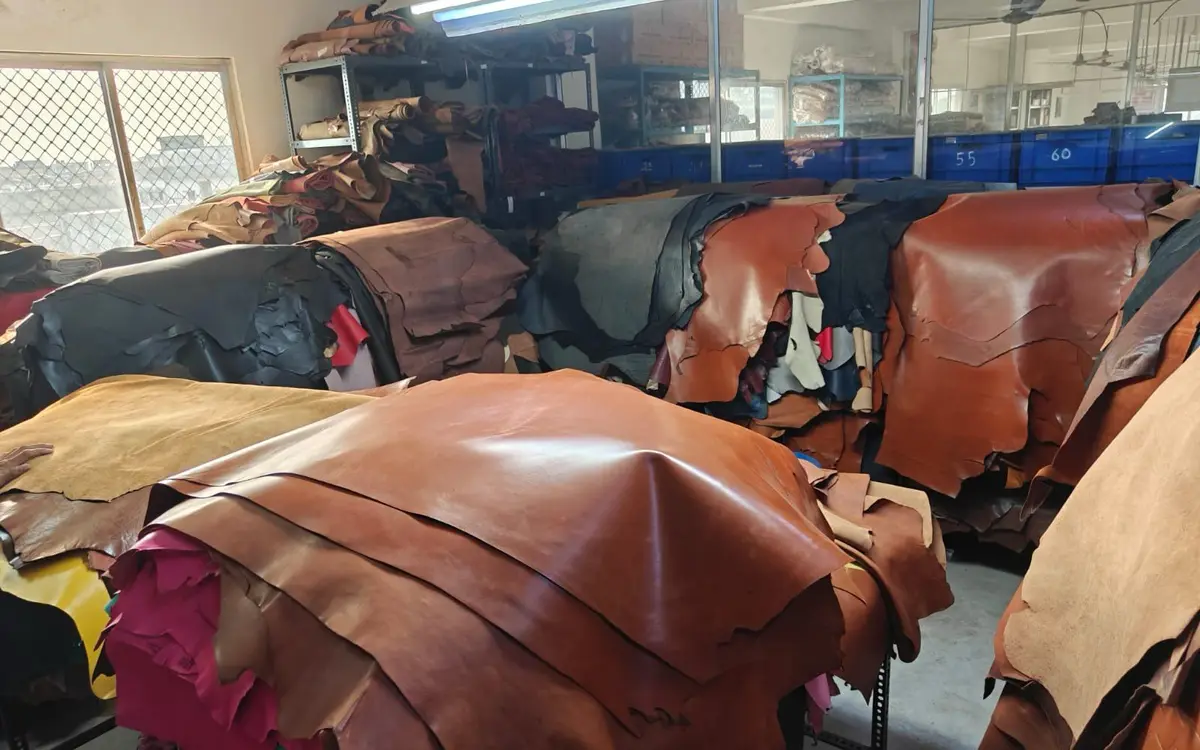
Cow for structure and most bag bodies. Buffalo where you want weight and a pronounced natural grain. Goat for small leather goods — it takes a fine grain and skives thin without weakening. Calf for the smoothest surface at the premium end. Sheep for lightweight linings and soft unstructured bodies.
The eight finishes
- Aniline — dye-through, no surface coating. Natural grain and colour variation stay visible. The most honest-looking leather and the least forgiving of a poor hide.
- Semi-aniline — a light protective topcoat over aniline dye. Grain still reads, but colour is more even and it wears better in retail.
- Nappa — very smooth, soft, fine even grain with a satin sheen. The default for a clean modern look.
- Pull-up — waxy and oil-infused, lightens to pale honey where it stretches over a curve and deepens in the recesses. It is meant to look used.
- Pebble — raised rounded grain, matte. Hides scuffs better than any other finish here, which is why it suits commuter and everyday styles.
- Saffiano — fine cross-hatch emboss. Crisp, structured, holds a sharp edge and scratches least.
- Exotic — crocodile and other embossed scale patterns on cow or calf. No CITES-listed skins.
- Vintage — waxed and hand-antiqued, burnished darker at the edges and corners with worn highlights across the face.
Every style in the range can be built in any of the eight. The finish shown on each product page is the one we photographed it in, not a restriction.
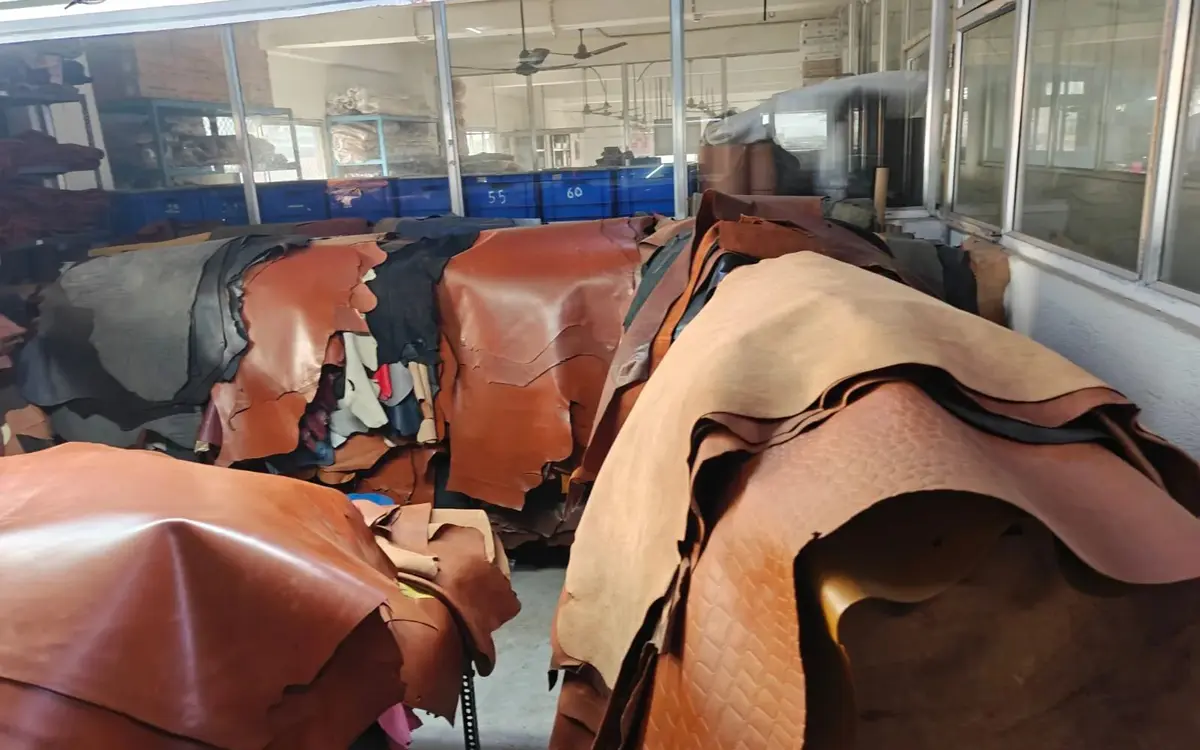
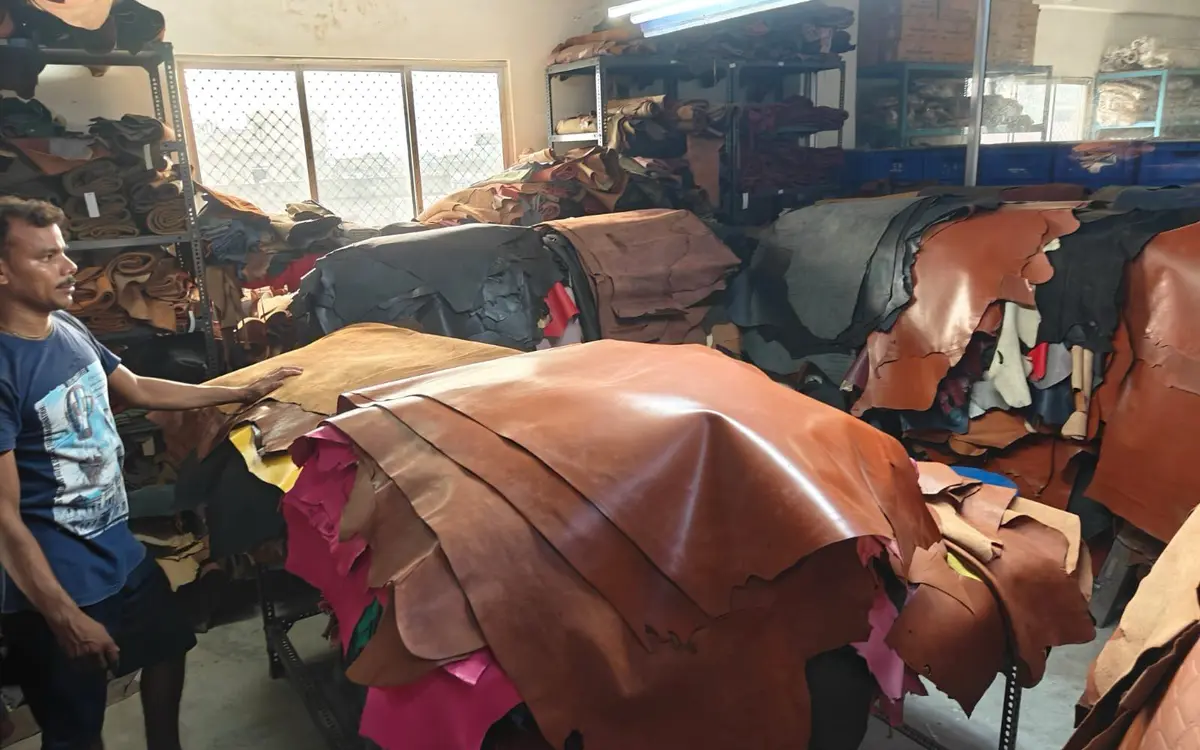
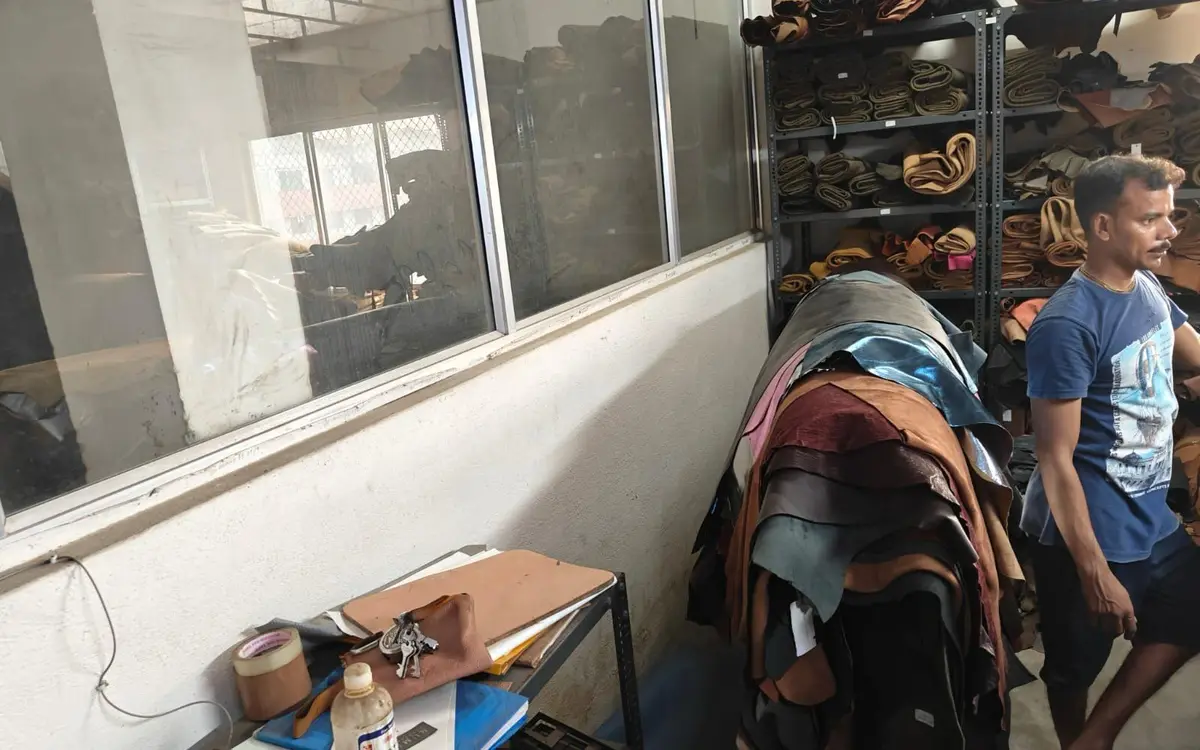
Hides, before they are anything
Sending us a colour
Send a physical swatch wherever you can — a Pantone reference alone will get you close but not exact, because leather takes dye differently from paper or thread. We match against your swatch at the hide stage and confirm on the sealed sample under a controlled light source.
If you are running the same colour across several styles in different leathers, tell us up front. Matching cow and goat to a single target is possible but it has to be planned into the lot, not fixed afterwards.
REACH and restricted substances
We test to the standards European buyers specify, and we send the reports rather than a summary of them. Third-party testing through SGS, Bureau Veritas or Intertek, per shipment on request.
| Substance | Standard | Our specification |
|---|---|---|
| Chromium VI | EN ISO 17075 | Below 3 mg/kg |
| Azo dyes | EN ISO 17234 / EN 14362 | Below limit of detection |
| Formaldehyde | EN ISO 17226 | To your programme limit |
| Nickel release | EN 1811 / EN 12472 | Hardware tested, below 0.5 µg/cm²/week |
| DMF (dimethylfumarate) | Regulation (EU) 2019/1021 | Not used |
LWG-rated leather is specified at enquiry where the programme requires it. Name the LWG rating you need on the tannery and we will source to it and provide the tannery’s certificate.
Chrome-free and vegetable tannage available where your programme requires it.
Last updated:
Ready to brief us?
Send a tech pack or a reference sample. We reply with feasibility, pricing tiers and a sampling timeline — usually within one business day.